
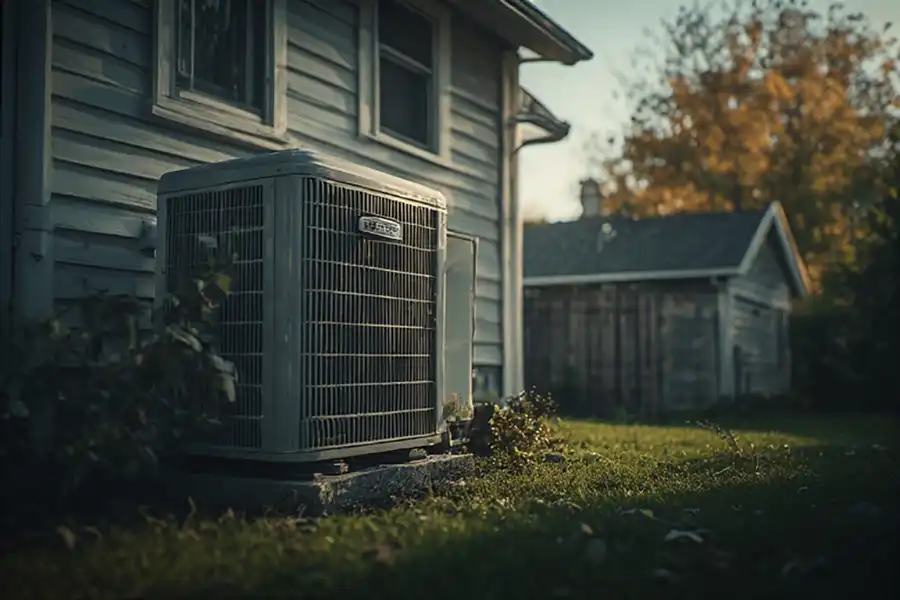
Anyone who has lived through a power outage in August knows the silence of a stopped air conditioner is louder than any noise it makes running. In our climate, cooling is not merely a luxury; it is the primary defense against the oppressive Gulf humidity that tries to seep into our homes daily.
While a furnace in the Midwest might rest for half the year, your AC unit essentially runs a marathon every day. Industry data suggests that cooling systems in our region degrade roughly 30% faster than the national average simply due to the relentless workload required to remove moisture from the air.
Ignoring this constant strain often leads to the dreaded “Friday Night Failure” right when you have guests over. Most homeowners do not realize that a struggling system doesn’t just break; it quietly drains your wallet through inefficient energy use long before it completely shuts down.
Because the stakes are so high, finding a Trusted Heating And Cooling Company In Houston TX is a financial decision as much as a comfort one. A true partner, such as Autumn Mechanical, focuses on managing the long-term health of your system rather than just selling you a quick fix.
Navigating the sea of contractors can be overwhelming without knowing exactly what to ask. By learning to identify the signs of a reliable Houston cooling service, you can secure lower energy bills and genuine peace of mind before the next heatwave strikes.
Beyond the Thermostat: Why Humidity Control Is the Secret to Feeling 75 Degrees in Houston
We’ve all walked into a room where the thermostat says 72 degrees, yet it still feels like a swamp. Fixing high humidity in Houston homes requires understanding that your air conditioner has two jobs: lowering the temperature and removing water from the air. If it fails at the second job, no amount of cranking down the dial will make you comfortable.
To dry out your home, your system must run long enough to pull moisture across the cold indoor coil, turning vapor into liquid that drains away. HVAC pros refer to this as removing “latent heat”—the hidden heat energy trapped inside humidity. When your system manages this correctly, you can actually set your thermostat higher while feeling cooler, which is the quickest way to lower your electricity bill.
Problems arise when a unit is oversized or malfunctions, leading to “short-cycling.” This occurs when the AC blasts cold air for five minutes, satisfies the thermostat, and shuts off before it has time to extract the moisture. You end up with a cold, clammy house because the air is cool, but the water remains trapped inside.
If you suspect your system isn’t dehumidifying properly, look for these common red flags:
- Sticky skin even when the temperature reading is low.
- Window condensation forming on the inside of the glass.
- Musty odors lingering in carpets or curtains.
Solving this requires a technician who understands airflow science, not just someone who swaps parts. This necessity leads directly to checking credentials.
The ‘TACLA’ Test: How to Verify a Texas HVAC License Before They Touch Your Unit
Allowing an unlicensed worker to modify your electrical lines or refrigerant pressure puts your home insurance policy and manufacturer warranty at immediate risk. In the Lone Star State, the only barrier between a qualified professional and a “man with a van” is the Texas Department of Licensing and Regulation (TDLR). Before you let anyone climb into your attic to diagnose a problem, you must confirm they are legally permitted to operate in this state.
Texas law requires every legitimate contractor to display a license number on their trucks and invoices, usually starting with “TACL.” You will generally encounter Class A (TACLA) or Class B (TACLB) designations. While Class B covers most residential units, a Class A license signifies the company is qualified to work on equipment of any size, often indicating a deeper level of technical expertise and established history.
Verifying Texas HVAC technician licenses takes just sixty seconds on the public TDLR database. Beyond the mandatory state license, look for NATE certified HVAC technicians as a gold standard for quality. This voluntary certification proves the technician has passed rigorous exams that exceed basic legal requirements, serving as one of the definitive signs of a reliable Houston cooling service.
Hiring a credentialed company ensures that if an accident occurs, you are protected by the contractor’s mandatory liability insurance rather than your own wallet. With a vetted professional ready to help, you avoid the nightmare of ghosted repairs. However, you shouldn’t call them for every single hiccup. Before scheduling an appointment, there are distinct physical checks you should perform to rule out simple errors.
Why Is My AC Blowing Warm Air? 3 Quick Checks Before You Call for Emergency Service
Nothing spikes blood pressure faster than feeling lukewarm air coming from your vents during a 95-degree afternoon. While your instinct might be to dial for emergency AC repair Houston 24/7 immediately, nearly one in five service calls turns out to be a simple issue the homeowner could have fixed for free. Before you commit to a diagnostic fee, take ten minutes to play detective with your system’s basic components.
Use this AC blowing warm air troubleshooting guide to rule out user error or minor maintenance gaps:
- Verify Power & Settings: Ensure the thermostat has fresh batteries and hasn’t been bumped to “Fan On” (which circulates warm air) instead of “Auto.”
- Inspect the Filter: Pull out your air filter; if it is matted with dust, it is choking your airflow.
- Check the Breaker: Check your main electrical panel and the outdoor disconnect box to see if a switch has tripped.
- Look for Water: Glance at the safety pan under your attic unit; standing water usually means a clogged condensate line triggered a safety shut-off.
Restricted airflow often leads to ice forming on the copper pipes connecting to the outdoor unit. If you see frost, do not lower the temperature to force the unit to work, as this can destroy the compressor. Turn the system off to thaw and prepare for the reality that a mechanical part has failed. Once the technician arrives and hands you a quote, you will face the most expensive decision a homeowner has to make.
The $5,000 Question: Should You Repair Your Old Unit or Upgrade to a Modern System?
Facing a four-figure repair bill on an aging system feels less like home maintenance and more like high-stakes gambling. You are suddenly forced to decide between patching a machine that might break again next month or investing in the average cost of new HVAC system installation. This financial fork in the road is stressful, but making the wrong choice based on panic can drain your savings account unnecessarily.
Financial planners and HVAC experts often rely on the “Rule of 5,000” to remove emotion from the equation. Multiply the age of your equipment by the estimated repair cost; if the total exceeds $5,000, the math heavily favors replacing the unit. For example, a $600 repair on an 8-year-old system ($4,800 total) is a justifiable fix, but that same repair on a 10-year-old unit ($6,000 total) signals it is time to upgrade.
Geography drastically changes this calculation because Houston’s climate is relentless compared to milder parts of the country. While units in northern states might last 20 years, our humidity and extended summer seasons typically grind compressors down in just 10 to 12 years. Repairing vs replacing an old air conditioner here means acknowledging that a decade-old system is already living on borrowed time.
Your decision gets even easier if your unit was manufactured before 2010 and uses R-22 refrigerant, often called Freon. This older chemical has been federally phased out, meaning supply is scarce and prices have skyrocketed to punitive levels. A simple refrigerant leak on an R-22 system is no longer a standard repair; it is a financial black hole that will never offer a return on investment.
Opting for a replacement isn’t just about stopping the bleeding on repair bills; it’s about accessing modern efficiency. Once you decide to invest in a new system, the conversation shifts from avoiding costs to generating savings through lower monthly electricity usage.
Cracking the SEER2 Code: How Much Money Can a High-Efficiency Unit Actually Save You in Texas?
Navigating the alphabet soup of HVAC terminology can be frustrating, but SEER2 is the one acronym that directly affects your bank account. Think of the new SEER2 ratings comparison for hot climates like the “city/highway MPG” sticker on a truck; a higher number means the engine burns less fuel to get the same result. Since January 2023, federal testing standards have become stricter to reflect real-world conditions, meaning a modern 16 SEER2 unit is significantly more efficient than a 16 SEER unit from just a few years ago.
Upgrading from a builder-grade unit to a modern system transforms your monthly budget by slashing electricity waste. While the average cost of new HVAC system installation rises with higher efficiency tiers, the return on investment appears clearly on your CenterPoint bill:
- Replacing a 10 SEER (15+ years old): The baseline “gas guzzler.”
- Installing a 14.3 SEER2 (Standard): Reduces cooling costs by roughly 23%.
- Installing an 18 SEER2 (High Efficiency): Reduces cooling costs by roughly 42%.
Beyond just raw numbers, the mechanics of cooling have evolved. Energy efficient heat pump benefits now include variable-speed technology, which is the secret weapon against Houston’s notorious humidity. Instead of blasting cold air and shutting off quickly—leaving the house feeling clammy—modern heat pumps run “low and slow.” This pulls more moisture out of the air, allowing you to set the thermostat higher while feeling cooler.
Selecting the right efficiency level is a critical financial decision, but even a top-tier system cannot survive neglect. Once that new unit is installed, the only way to protect your investment is by preventing the sudden breakdowns that leave families sweating in the dark.
Stop the ‘Friday Night Failure’: What a Professional Houston Tune-Up Actually Includes
Nothing triggers panic quite like your thermostat reading 82°F when it’s set to 73°F. In Houston, your air conditioner runs more hours in a single summer than a car engine drives in a year. Ignoring this workload leads to “Friday Night Failures,” which are usually caused by small, inexpensive parts wearing out from heat stress rather than a total system collapse.
Distinguishing a legitimate inspection from a discount “splash and dash” service is vital for protecting your wallet. A qualified technician uses multimeters to predict the future, checking components like the capacitor—essentially a battery that kickstarts the motor—and the contactor, an electrical switch that physically wears down over time. Catching these minor issues early prevents the catastrophic compressor failures they eventually cause.
To ensure you get the full value of HVAC maintenance plans for Houston homeowners, verify your technician covers this specific seasonal furnace tune-up checklist:
- Capacitor Testing: Verifying it holds enough charge to start the motor safely.
- Refrigerant Levels: Ensuring pressures match manufacturer specs for peak cooling.
- Contactor Inspection: Checking for pitting or burning on electrical connections.
- Drain Line Flush: Clearing algae buildup to prevent ceiling water damage.
- Coil Cleaning: Removing grime that kills efficiency.
Consistent care effectively doubles your equipment’s lifespan. A neglected unit often dies by year ten, while a maintained system can keep your home comfortable for two decades. But keeping the machinery running is only half the battle; next, we must address the invisible particles circulating through that system.
Breathing Easier in the Bayou City: Solving Indoor Air Quality and Dust Problems
We see the yellow pollen coating our cars every spring, but we often forget that same particulate matter eventually makes its way indoors. In the Bayou City, high humidity combines with dust and allergens to create a heavy, stagnant environment inside your living space. Effective indoor air quality solutions Houston residents rely on go beyond basic temperature control; they actively remove the microscopic irritants that trigger allergies and create that stale, sticky feeling.
Upgrading your air filter seems like a simple fix, but there is a hidden risk regarding density. While higher MERV ratings capture smaller particles, buying the thickest filter available at the hardware store can actually restrict airflow, suffocating your system like a runner trying to sprint while breathing through a narrow straw. A professional assessment helps you find the “Goldilocks” filter that traps dust without straining your blower motor or driving up electricity usage.
Moisture accumulation on your indoor coil can also lead to a musty odor known locally as “Dirty Sock Syndrome,” which occurs when bacteria thrive on wet metal surfaces in the dark. UV germicidal lights offer a powerful defense against this biological growth by replicating the sterilizing power of sunlight directly inside your air handler. This technology neutralizes mold spores before they can circulate through your ductwork, keeping the air smelling fresh and protecting the system’s efficiency.
For rooms that never seem to get cool enough or suffer from persistent dust issues, like a converted garage or a master suite extension, modifying the central ductwork isn’t always the right answer. Many homeowners are finding that installing ductless mini split systems for Texas homes provides targeted filtration and cooling where it is needed most without overworking the main unit. Addressing these air quality factors is the final technical step before securing a service partner who can keep everything running smoothly.
Your Houston Comfort Roadmap: How to Secure Your Home’s Efficiency Today
You no longer need to view your air conditioner as a ticking time bomb during a Houston heatwave. Instead of worrying about sudden breakdowns or inflated repair bills, you now possess the insight to manage your home’s comfort proactively. Finding a Trusted Heating And Cooling Company In Houston TX isn’t about luck; it is about knowing exactly what standards to demand from your service provider.
To lock in reliable cooling for the season ahead, start with this simple three-step plan:
- Check the Age: Locate the manufacture date on your outdoor unit’s data plate to anticipate replacement timelines.
- Verify the License: Ensure your contractor holds an active Texas license (TACLA) to guarantee they meet state safety standards.
- Schedule Prevention: Book a pre-season tune-up to catch minor issues before they become mid-summer emergencies.
These steps allow you to prioritize repairs based on actual return on investment and safety rather than sales pressure. When you recognize the signs of a reliable Houston cooling service, you stop paying for temporary patches and start investing in long-term system health.
Don’t wait for the humidity to spike inside your home before taking action. For honest assessments and skilled service that respects your budget, visit Autumn Mechanical. Secure your peace of mind today, knowing your home will stay cool and your energy bills will stay under control, no matter how high the mercury climbs.
Autumn Mechanical
18812 Tomato St.
Spring, TX 77379
(713) 864-8368
View our Google Business Listing
View our Facebook Page