
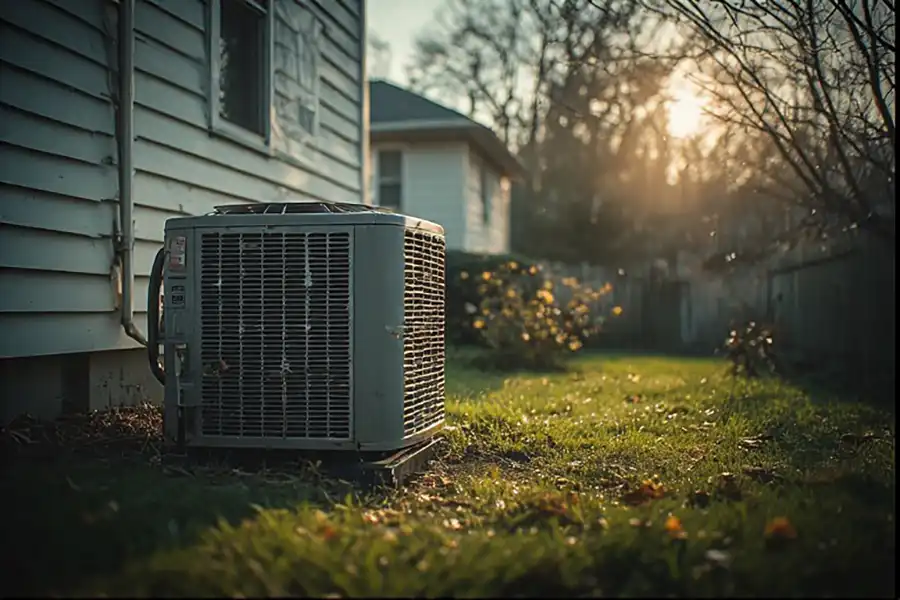
Your AC just quit, and the technician hands you a $1,200 bill. Before paying, consider whether you are fixing a reliable machine or throwing cash at a failing engine. Like an aging car, your comfort system is a depreciating asset with a finite clock. According to experts, ignoring the signs your AC unit is dying creates massive financial waste.
Industry data puts the average lifespan of commercial HVAC units and residential systems near 15 years. Judging solely by today’s repair cost ignores the Total Cost of Ownership—the combined expense of future breakdowns and high utility bills. Navigating equipment depreciation requires a clear framework based on the 50% Rule and SEER2 ratings to simplify the decision.
Is Your AC Just Tired or Truly Dying?
Imagine driving a car that suddenly drops to five miles per gallon while loudly grinding its gears. That same creeping deterioration happens to aging climate control systems. Typically, residential air conditioners last 12 to 15 years, while furnaces push 15 to 20 years, closely mirroring commercial systems.
Age isn’t everything when evaluating HVAC performance decline symptoms; you must also watch for the “Ghost in the Machine.” Unexplained banging noises, sudden utility bill spikes, and a frozen “Ice Block” on your indoor coils are all definitive signs your AC unit is dying.
Distinguishing between routine wear and fatal flaws ultimately protects your wallet. Replacing a cheap starting capacitor is a simple “Band-Aid” fix, but a cracked heat exchanger or seized compressor requires major surgery. Before sinking thousands into a fading machine, you need a reliable way to decide if the repair is actually worth the investment.
The 50% Rule: A Simple Math Hack for HVAC Decisions
Facing a massive repair bill forces a tough choice, but you don’t need to be an accountant to figure out how to calculate HVAC depreciation. Industry pros rely on the “50% Rule” to find the value threshold: if a fix costs more than half the price of a brand-new unit, you are throwing money away.
For borderline cases, the “Age x Repair” formula acts as an instant HVAC repair vs replacement cost calculator. Follow these steps to calculate your repair-to-value ratio:
- Multiply your system’s age by the estimated repair cost.
- Compare that total to the 5,000 threshold limit.
- If the result exceeds 5,000, replacement is the smarter financial move.
Homeowners frequently wonder, is it worth repairing a 15-year-old furnace for just $400? Using our simple math hack (15 x $400 = 6,000), the answer is no. Pumping cash into outdated machinery ignores ongoing energy waste, whereas upgrading unlocks immediate utility savings through improved SEER2 ratings.
Why SEER2 Ratings Are Like a Permanent 20% Off Coupon
Just like a failing engine burns excess fuel, an aging air conditioner guzzles power to maintain indoor comfort. While an old unit might still blow cold air—its capacity for comfort—it burns massive amounts of electricity to do it. Balancing SEER2 efficiency ratings vs repair costs is crucial before authorizing a fix. SEER2 is simply your system’s miles-per-gallon score, and a higher rating operates as a permanent discount on your utilities.
Look at the actual money in versus money out. An outdated 10 SEER unit easily guzzles $200 of electricity monthly, while a modern 16 SEER2 system drops that exact cooling load to $140. Thanks to the energy savings from high-efficiency HVAC upgrade, a new system generally pays for itself over five to seven years through slashed bills alone.
Keeping a dying machine to avoid replacement fees rarely makes financial sense. When comparing ongoing HVAC maintenance costs vs system longevity, a “cheap” repair plus inflated energy bills ultimately costs more than a modern investment. Efficiency isn’t the only hidden drain; fixing older units can trigger the R-22 trap.
The R-22 Trap: Why Fixing Older Units Could Be a $2,000 Mistake
Your AC just stopped cooling, and the technician says it needs more “Freon.” If your system was installed before 2010, you are directly facing the severe R-22 refrigerant phase out impact. This old, expensive coolant is no longer manufactured, meaning remaining supplies face extreme scarcity pricing. Refilling these outdated systems is like buying gold-plated gas for a junk car.
Finding a leak quickly turns into an irrational expense. Before punching numbers into an HVAC repair vs replacement cost calculator, review why older R-22 units are high-risk assets:
- Scarcity Premium: Dwindling supplies make minor recharges shockingly expensive.
- The Ticking Clock: A leak proves the internal hardware is permanently failing.
- Compounding Failures: The cost of replacing heat exchanger vs new unit immediately breaks the 50% Rule.
Ultimately, dumping cash into obsolete machinery is a losing financial battle. Unavoidable replacements, however, can be turned into a financial advantage using tax deductions and Section 179 benefits.
HVAC as an Asset: Tax Deductions and Section 179 Benefits
Small business owners face a different math problem when the AC dies. When evaluating the tax implications of HVAC replacement, differentiating between an HVAC capital expenditure vs operating expense is critical. Fixing a leak is an operating expense—a simple maintenance write-off. Buying a brand-new system is a capital expenditure, treated as a long-term property investment rather than a temporary bandage.
Normally, the IRS makes you write off that investment slowly using a MACRS depreciation schedule for mechanical equipment, spreading those deductions across 39 or 15 years. Fortunately, the government offers a powerful shortcut for qualifying business properties: the Section 179 tax deduction for HVAC. This acts as a “Buy Now, Deduct Now” bonus, letting you deduct the full purchase price in the very first year.
Claiming this upfront deduction acts as a massive discount, drastically lowering the net cost of upgrading an inefficient system. Instead of bleeding cash on endless repairs, you transform a major headache into a strategic financial advantage.
Your HVAC Decision Checklist: Repair or Replace?
Run your current system through this decision checklist:
- Age: Is your system past the average lifespan of commercial HVAC units or home systems (15+ years)?
- Cost: Does an HVAC repair vs replacement cost calculator show the fix breaks the 50% Rule?
- Coolant: Does it rely on outdated, expensive refrigerant?
- Efficiency: Are climbing utility bills silently draining your wallet?
- Tax Benefits: Can you leverage new efficiency tax credits or depreciation?
If you answered “yes” to most, the next step is requesting quotes. Ask a professional for a “Manual J” load calculation to guarantee proper sizing, and trust the financial math. Upgrading a failing machine for modern efficiency delivers reliable cooling and long-term utility savings.
https://autumnmechanical.com/hvac-services/