
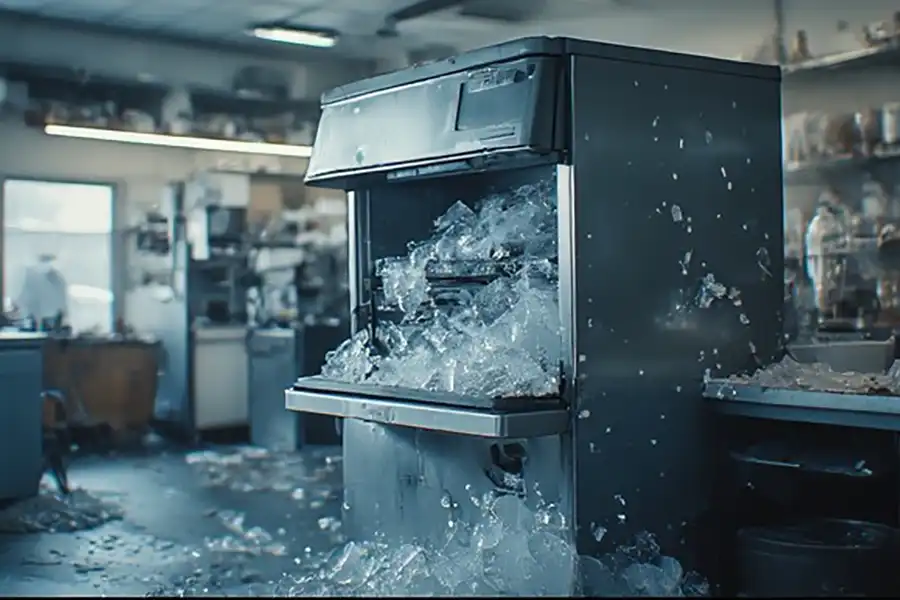
It’s 2:00 PM on a sweltering 90-degree Houston afternoon, your dining room is packed, and you suddenly face an empty ice bin. Wondering “why is my commercial ice machine not making ice?” during peak hours equals instantly lost revenue. According to HVAC industry data, our city’s severe humidity forces local equipment to work up to 30% harder just to survive.
Protecting equipment starts with understanding that machines don’t “add cold”—they use a heat exchange cycle to pull heat out of water. Before dialing for Houston Commercial Ice Machine Repair, spotting the three early warning signs of production drops is crucial. Catching these clues keeps a simple ice machine repair from becoming an operational disaster.
My Commercial Ice Machine Not Making Ice
Commercial ice machines act like giant lungs; they must “breathe” to pull heat out of the water. If the kitchen’s ambient temperature threshold crosses 90 degrees, or if airflow restriction chokes the system, ice production completely stops to prevent compressor overheating.
Fortunately, you can often avoid an expensive service visit. Try this quick 3-step check to distinguish a simple clog from a mechanical failure:
- Reset Power: Flip the main switch off, wait a minute, and turn it back on. This resets basic errors without voiding your warranty.
- Check Water Valves: Ensure the wall supply line is fully open. (While you look, spotting puddles helps in fixing common restaurant ice maker leaks early).
- Master the “Airflow Test”: Pull the front grill filter. If it is caked in dust and kitchen grease, wash it in your sink.
Restoring airflow frequently solves the issue right away. But if your bin stays empty, you might need a 24-hour emergency ice maker service Houston operators trust. Sometimes, the problem isn’t the air—it’s the water.
Stop ‘Hard Water’ Damage
Houston is notorious for mineral-heavy municipal water that silently attacks your equipment. Think of your unit’s internal plumbing like arteries; as water flows, it leaves behind calcium deposits called “scale.” The impact of Houston hard water on ice machines is severe because this chalky scale coats the evaporator plate—the metal grid where water freezes. Instead of touching cold metal, water sits on mineral insulation, forcing the machine to overwork.
Spotting this mineral cholesterol early prevents costly shutdowns. Before researching how to clean a commercial ice machine water system, simply check your bin for these signs of scale buildup:
- Cloudy ice: Cubes look milky instead of crystal clear.
- Small cubes: The ice is thin, misshapen, or shatters easily.
- Slow harvest cycles: The machine takes noticeably longer to drop fresh batches.
Ignoring these symptoms forces components to run nonstop, risking complete burnout. Experiencing the benefits of regular commercial ice machine descaling requires professional acid washes that melt away this buildup, restoring your unit’s efficiency and purity. Yet, if descaling doesn’t fix long freeze times, the issue might transcend dirty water lines and require a deeper mechanical assessment.
Repairing vs. Replacing
Facing a breakdown before the dinner rush forces a stressful choice between a quick patch or buying new. To navigate repairing vs replacing old commercial ice equipment, use the simple “Age x Cost” rule. Multiply the machine’s age in years by the repair estimate; if that total exceeds a replacement’s price tag, it is time to confidently upgrade rather than waste funds.
Internal warning systems vary wildly between manufacturers, meaning Manitowoc vs Hoshizaki repair costs depend heavily on their unique proprietary parts. For example, identifying faulty ice maker bin sensors usually happens when you discover an overflowing bin simply because the machine never received the electronic signal to stop freezing. Because harvest cycle sensors and internal triggers are highly brand-specific, replacing them safely often requires a certified Hoshizaki technician in Harris County.
Beyond simple sensor glitches, major mechanical breakdowns quietly drain your operational budget. Recognizing the signs of a failing ice machine compressor—like a persistent, loud humming noise or a cabinet radiating extreme heat—prevents you from pouring money into a doomed unit. Catching these fatal symptoms early prevents total system failure and protects your bottom line.
Preventative Maintenance Plan
Protecting your bottom line means keeping ahead of health inspectors and mechanical failures. While you know wiping the machine’s exterior is essential, a custom preventative maintenance plan for Houston food businesses is what actually cuts downtime in half. In our incredibly humid climate, dark, damp ice bins quickly breed “Bio-slime”—a pinkish mold that ruins ice flavor and triggers immediate health code violations. If you are wondering how often should commercial ice machines be serviced, strictly tailor the schedule to your daily usage:
- Low Volume (Office Breakrooms): Professional deep clean every 6 months.
- High Volume (Restaurants & Cafes): Professional deep clean every 3 months.
Planning these exact intervals helps you predictably budget for necessary commercial refrigeration and ice machine parts replacement, like swapping clogged water filters before hard scale chokes your internal water lines. Instead of waiting for a costly mid-shift emergency, proactive upkeep secures your revenue.
3-Step Action Plan to Keep the Ice Flowing
Stop treating your equipment like a mystery box. Execute a 30-day ice machine maintenance audit to catch minor airflow or scale issues early. Safeguard your business revenue with reliable ice production by establishing a relationship with a certified technician long before a summer heatwave strikes.
When Houston humidity spikes and your bin sits empty, don’t panic. Partner with Autumn Mechanical for the 24-hour emergency ice maker service Houston restaurants trust to evaluate and repair your systems. Keeping a trusted professional on speed dial turns a potential shutdown into a minor hiccup.
Autumn Mechanical
18812 Tomato St.
Spring, TX 77379
(713) 864-8368
View our Google Business Listing
View our Facebook Page